After Halloween, a look at the costumes, doorstep visits, and small acts of generosity that keep a neighborhood tradition alive.
Culture & Holidays · November 1, 2026 · NY Report
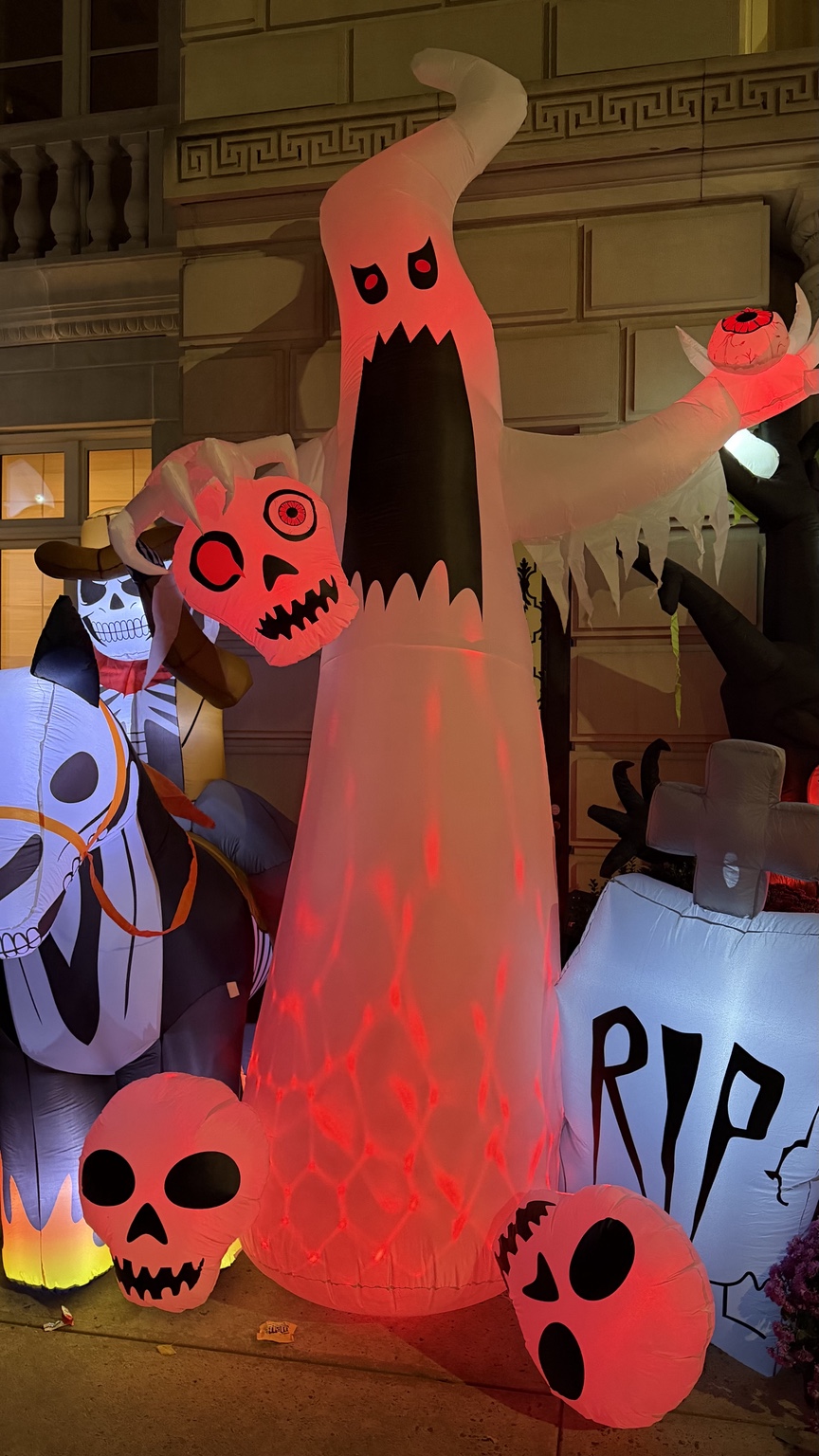
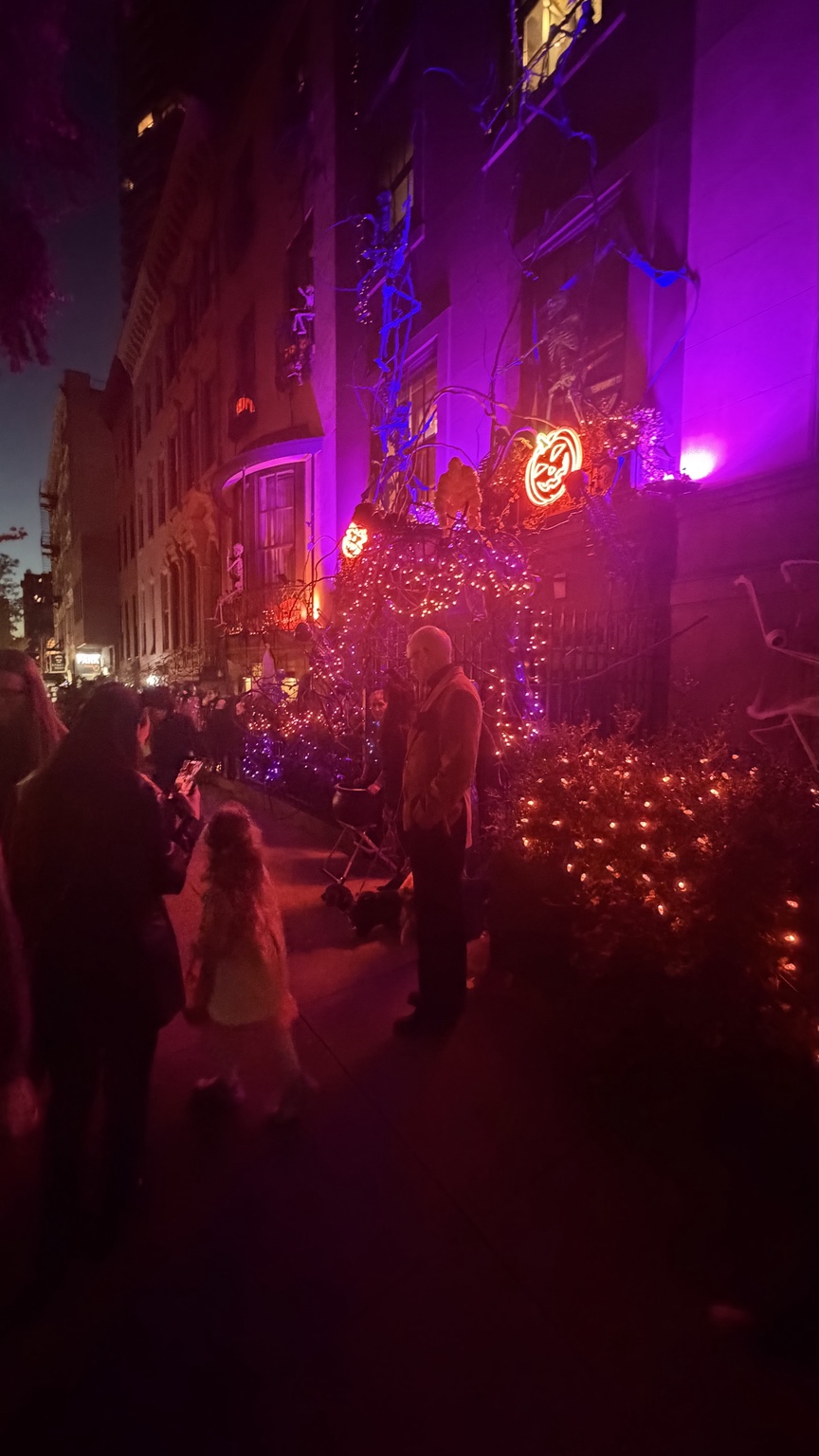
Halloween was yesterday, October 31, but the photographs leave a little of its magic behind: an enormous glowing ghost, grinning skulls, purple light washing over a building, and people gathering along a decorated sidewalk. For one evening, an ordinary entrance becomes a stage. The street becomes somewhere to linger.
At the heart of the celebration is a familiar invitation: “Trick or treat.” Children get the sweets. Adults get the chance to keep a promise made, informally, by generations before them: tonight, there will be something waiting at the door.
 Terry Miller
A tradition with more than one beginning
There is no single, neatly documented moment when someone invented trick-or-treating. Halloween gathered customs over centuries, and the modern candy round should not be mistaken for an ancient ritual preserved unchanged.
Among its historical relatives is souling. English Heritage describes people visiting households around Halloween and All Souls’ Day, receiving small soul cakes in exchange for prayers for the dead. Another related practice, guising, involved dressing in disguise and offering entertainment for a reward.
These customs help explain the familiar combination of costumes, doorstep visits, and gifts. But resemblance is not a complete family tree. Folklorists at the Library of Congress place trick-or-treating alongside a wider range of seasonal visiting and masking traditions, cautioning against an overly simple origin story.
How the candy round became familiar
In North America, older visiting traditions took new forms. HISTORY traces their revival in Irish and Scottish communities and describes the growth of organized neighborhood trick-or-treating during the twentieth century. The custom spread especially widely in the decades around and after World War II.
Over time, the mischievous bargain in the phrase softened into a shared performance. A costume, a knock, a handful of candy, a thank-you: everyone knows their part, and every new generation gets to learn it.
 Terry Miller
Why we keep opening the door
In a city, it is possible to live close to people without knowing them. Halloween offers a small interruption. Someone who usually passes an entrance stops to admire it. A child practices speaking to a neighbor. An adult who spent an afternoon arranging decorations gets to see somebody smile.
That is one reason the ritual deserves care. Its pleasure depends on people feeling welcome: a clear walkway, patience with a shy child, room for someone who moves differently, and respect for households that choose not to participate.
The decorations will come down. The sweets will disappear. What can remain is the memory of a street that felt a little more shared—and the hope that, next October, the door will open again.
Historical sources: English Heritage: Soul cakes; Library of Congress: Masking and Mumming; HISTORY: Trick-or-treating’s origins. Cultural commentary and historical synthesis; no interviews or citywide attendance claims.